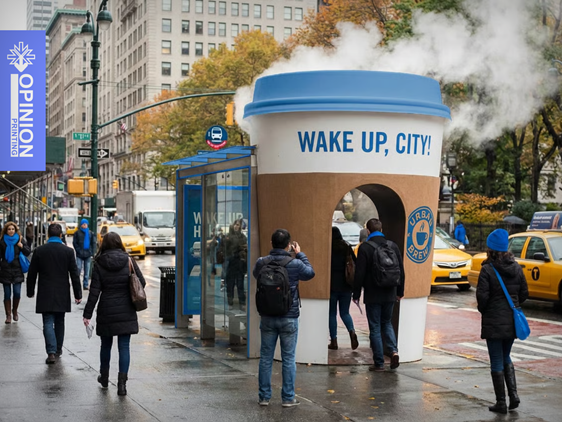
Large-format outdoor advertising is undergoing a quiet but very noticeable shift. Not long ago, scale was what mattered most: a bigger format, stronger color, maximum visibility. Today, brands think about outdoor differently-as a medium that needs to work both from a distance and up close, by day and after dark, for a week and for an entire season.
It’s not only the materials that are changing, but above all the way displays are planned. More and more often, instead of a single massive medium, a set of lighter, replaceable elements appears-easy to swap out and service without having to rebuild everything from scratch.
Large surfaces, less weight
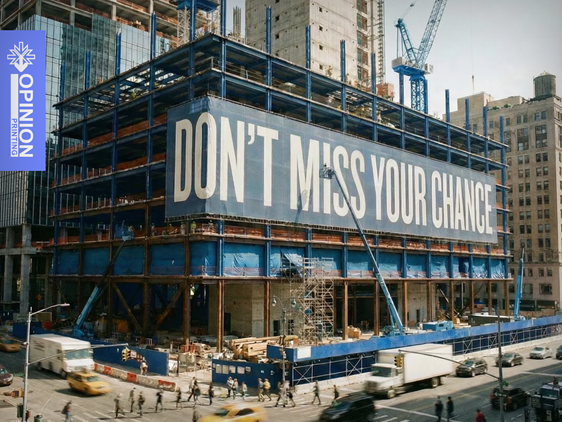
One of the most visible trends is the growing popularity of lightweight solutions on façades and temporary structures. Outdoor is increasingly moving toward materials that make it possible to achieve a huge format without the impression of a “heavy sheet” stuck to a building.
In practice, this means greater freedom to design across large surfaces and better resistance of the display to changing weather conditions. What becomes key is not only what you see in the graphic, but also how the whole thing behaves in a real environment-in wind, rain, and the flow of city life.
Light as part of the message
Outdoor is increasingly no longer just “printing for daytime.” Brands design campaigns with the idea that advertising also lives after dark-and that light is not an add-on, but part of the creative concept.
Backlit formats create a completely different impression than classic displays: more depth, stronger contrast, a clearer presence in the cityscape. As a result, one campaign can function in two versions-day and night-without changing the content.
Systems that stay for longer
A move away from one-off executions is becoming more and more evident. Brands no longer want to build structures from the ground up for every campaign-they prefer investing in modular solutions where the graphic changes, but the system remains.
This approach fits the “less, but better” trend: higher quality, greater durability, and the ability to refresh the message seasonally without unnecessary logistical costs.
In such executions, the importance of finishing details grows, because outdoor is meant to be not only impressive on installation day, but also easy to reuse.
Simplicity instead of visual noise
In outdoor advertising design, minimalism is increasingly winning. In an urban space where the audience sees the message while moving, an excess of elements simply doesn’t work.
That’s why brands focus on:
An interesting approach is “two-layer” design: from afar, the message should be instantly recognizable, and only up close should it reveal product detail or the quality of execution.
Outdoor is starting to resemble good packaging-it works fast, but leaves an impression.
The shop window as a micro outdoor medium
A large part of communication is shifting today to street level-literally. Shop windows are becoming a fully fledged outdoor advertising medium.
Instead of fully covering the glass, more and more often selective compositions appear: fragments of graphics, transparencies, backlit elements. This makes the window work like a “micro billboard”-it catches attention from the street while not cutting the interior off from the surrounding space.
This solution is especially effective in cities, where outdoor doesn’t have to be huge to be effective.
Tactical outdoor – shorter runs and quick changes
One of the most interesting trends is the move from “six-month” campaigns to “a few weeks” campaigns.
Brands increasingly plan outdoor in short sequences:
This requires agility in production and installation, but offers a huge advantage: the message is fresh, and the campaign can learn in real time. If something works better, the next installment reinforces that direction instead of repeating the same pattern.
Technical details that make the difference
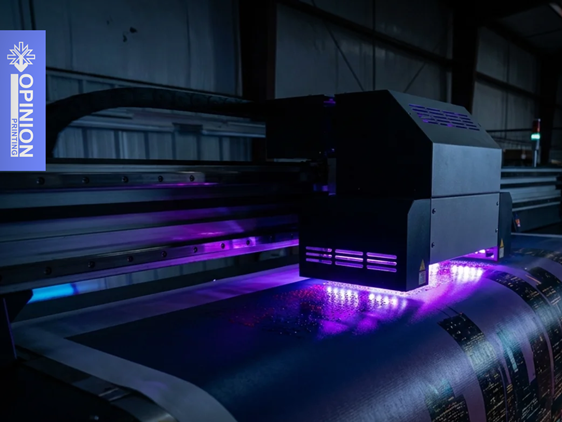
Although visual trends matter, the final outdoor effect still largely depends on things the audience doesn’t directly see: finishing quality, color consistency, and matching the solution to the display location.
In outdoor, there are no “perfect conditions”-there is wind, light, reflections, street movement, and perspective. That’s why the best executions start not with the question “what format?”, but with the question:
in what situation will the audience see this message?
Outdoor as a deliberate choice
Large-format printing in outdoor advertising is entering a stage of maturity. Instead of thinking “the more, the better,” what matters is the accuracy of decisions:
lightweight solutions where scale is needed,
light where the campaign must work 24/7,
modularity where the message is meant to live seasonally,
simplicity where the audience sees the ad in motion.
The result? Outdoor that looks good from a distance, holds up up close, and is easy to maintain over time-exactly what both audiences and brand teams expect today.